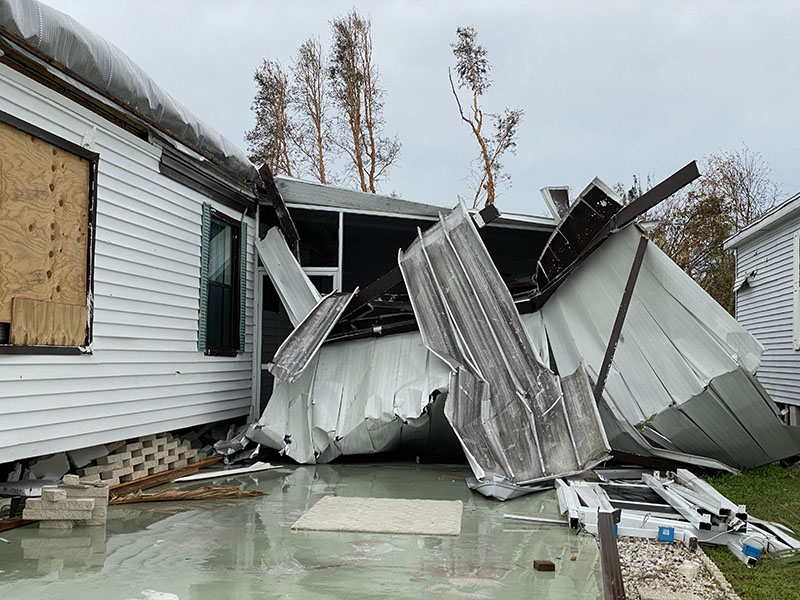
Getting your mobile home back in shape after a hurricane is a top priority. Post-hurricane mobile home repairs are necessary to restore safety and comfort. Quick action can prevent further damage and ensure that your home is secure for the future. This article outlines steps for repairing and restoring your mobile home after a hurricane.
Inspecting the Exterior for Damage
The first task in post-hurricane mobile home repairs is checking the exterior of your home. Start with the roof, as hurricanes can easily damage shingles or tear off sections. Look for missing or damaged roofing materials. Even small leaks can cause long-term damage to the interior, so it’s essential to address any issues immediately.
After the roof, inspect the siding. High winds can cause siding to break or become loose. Repair any cracks, holes, or areas where the siding has come off. Additionally, check the windows and doors for broken glass or damaged seals. These vulnerabilities can allow water and wind to enter, causing further damage.
Finally, inspect the skirting. The skirting around your mobile home helps to protect it from wind and water. If it has been damaged, replace or repair it quickly to maintain the structural integrity of your home.
Repairing Structural Damage
Hurricanes can cause significant structural damage to a mobile home. Once you’ve checked the exterior, it’s time to assess the interior for any structural issues. Start by checking the foundation. Look for any cracks, settling, or signs that the foundation has shifted. This type of damage can affect the overall stability of the home and should be addressed by a professional.
Next, inspect the walls and ceilings for signs of cracks or water damage. Water leaks during a hurricane can weaken the structure and lead to mold growth. Remove the affected areas and replace them with new materials if you spot damage. Be sure to check for any electrical issues caused by water exposure.
Addressing these structural issues as soon as possible will prevent further damage and ensure the safety of your home.
Fixing Water Damage
Water damage is one of a hurricane’s most common and destructive effects. After a storm, checking for and repairing any water damage should be a priority. Begin by inspecting the floors. Look for any signs of water stains, soft spots, or warping. If your mobile home has carpet, check for mold or mildew growth, which can occur in damp conditions.
Check the cabinetry and plumbing for water damage in the kitchen and bathroom. If you find rotting wood or rusted pipes, replace them promptly to avoid long-term issues. You may need to remove and rebuild the damaged sections with new materials. Be sure to inspect the insulation as well, as water can cause it to lose its effectiveness.
Repairing water damage quickly helps prevent further deterioration and mold growth. Don’t delay in addressing these problems.
Restoring the HVAC System
After a hurricane, your HVAC system may also be affected. High winds and flooding can damage HVAC units, ducts, and vents. Start by inspecting the exterior unit. Check for dents, cracks, or any debris that may have been blown into the unit. Clean the unit and remove any obstructions that could impair its function.
Next, check the ducts inside your mobile home for damage or leaks that could prevent the system from heating or cooling effectively. If necessary, replace damaged ducts or call a professional for repairs. You should also replace the air filters to ensure the system operates efficiently.
Restoring your HVAC system after a hurricane is essential for maintaining a comfortable living environment and avoiding long-term damage from poor air quality.
Dealing with Electrical Repairs
Electrical repairs are another crucial part of post-hurricane mobile home repairs. Flooding and wind can cause significant damage to wiring, outlets, and electrical panels. Begin by turning off the main power supply to avoid any electrical hazards. If you suspect water damage to the electrical system, it’s essential to call a licensed electrician to inspect and repair the system.
Check the outlets and switches in each room for signs of water or fire damage. If any are damaged, replace them immediately. You should also inspect the electrical panel to ensure it is functioning correctly. If there are any tripped circuits or signs of burning, consult a professional electrician before restoring power.
Restoring your electrical system will ensure your mobile home is safe and habitable after the hurricane.
Replacing Damaged Appliances
Hurricanes can also damage appliances in your mobile home. Check all your appliances for any signs of damage, whether it’s the refrigerator, stove, or washing machine. If any appliances were exposed to water or high winds, you may need to replace them.
In particular, check the refrigerator for any signs of electrical or water damage. Water exposure can lead to rusting and mold growth, ruining the appliance. For other appliances, like the stove and washing machine, look for broken components or functional issues.
After the storm, replacing damaged appliances ensures your mobile home remains functional and livable.
Addressing Mold and Mildew
Mold and mildew are common after hurricanes due to excess moisture. If your mobile home has been exposed to water, it’s essential to inspect all areas for mold growth. This can include the walls, floors, ceilings, and hidden areas like behind appliances and in closets.
If you notice mold or mildew, take immediate action. Clean the affected areas with water, vinegar, or a mold cleaner. For larger areas of mold, you may need to remove and replace materials such as drywall, insulation, or carpeting.
Preventing mold growth is crucial, as it can lead to health issues and further damage to your home. Act quickly to keep your mobile home safe and habitable.
Securing Your Mobile Home for Future Storms
Once the post-hurricane mobile home repairs are complete, it’s important to secure your home for future storms. Consider reinforcing your roof and windows with hurricane-resistant materials. Adding extra anchoring to the foundation can also help your home withstand high winds.
To prevent future damage, inspect the skirting regularly and make repairs as needed. Creating an emergency kit and developing a storm evacuation plan are also good ideas. These preventative measures will help reduce the risk of damage in future hurricanes.
Conclusion
After a hurricane, post-hurricane mobile home repairs are essential for restoring your home to its original condition. Each step is vital to ensure your mobile home remains safe and functional, from fixing structural damage to addressing water damage. By acting quickly and addressing these issues, you can confidently return to your home, knowing that it’s prepared for the future.
See Also: